
When the Weather Is Mild, What Happens to the Air Inside Your Home?

Mild weather doesn't always mean the air inside is comfortable.
After a stretch of rainy weather around Fort Dodge, it can feel great to turn off the air conditioner and open the windows. The temperature may be comfortable, but temperature is only one part of indoor air quality.
When your heating and cooling system isn’t running much, less air passes through its filter. At the same time, humidity from wet weather, showers, cooking, and other everyday activities can build up inside. Many homes in our area also lack a dedicated fresh-air system or air-to-air exchanger. That makes it especially useful to understand how air moves through your home.
A filter only cleans air that moves through it
Your furnace filter captures particles from air passing through the HVAC system. When the blower is off, the central filter isn’t cleaning the air in your rooms. Opening a window brings in outdoor air, but that air does not pass through the furnace filter first.
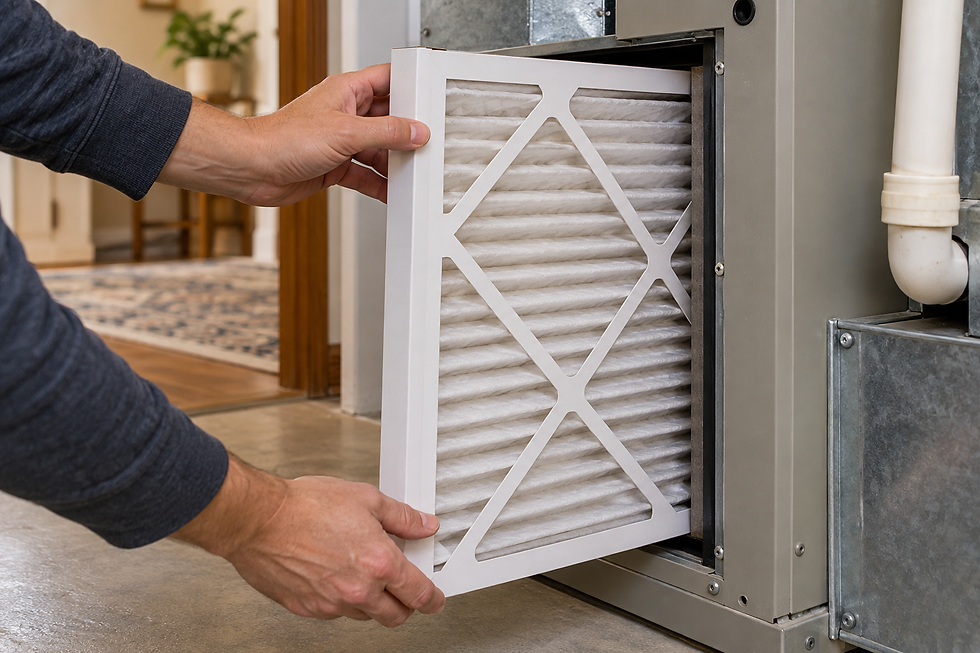
Illustration: The right filter needs enough airflow through the system to do its job.
You can run the system fan to circulate and filter air even when you don’t need heating or cooling. Before changing fan settings or upgrading to a more restrictive filter, though, make sure your system can maintain proper airflow. A dirty filter or a filter that is too restrictive can reduce the amount of air moving through the system.
The key distinction: Circulating air helps filtration. It does not, by itself, remove humidity.
Why mild weather can leave a home feeling damp
In warmer weather, an air conditioner removes some moisture while it cools. During a mild, rainy stretch, you may have no reason to run it. Moisture can still enter the home or be produced indoors, leaving the air feeling clammy even though the thermostat reads a comfortable temperature.
The first step is to measure rather than guess. An inexpensive hygrometer will show your indoor relative humidity. A useful goal is to keep it between 30% and 50% when possible and below 60%. Condensation on windows, musty odors, and damp-feeling rooms are also signs to investigate.
How can you lower humidity without running the air conditioner?
Start by controlling moisture where it comes from:
Use bathroom exhaust fans during showers and afterward. Make sure they vent outdoors, not into the attic.
Use the kitchen exhaust fan when cooking and confirm it vents outdoors.
Check for leaks and water entry, including around foundations, windows, plumbing, and crawlspaces. A dehumidifier cannot solve an active leak.
Check any whole-home humidifier. If one is installed, make sure it is off or set appropriately for the season.
Use a dehumidifier when indoor humidity stays high. A portable unit may work for one problem area; a whole-home unit may be appropriate when moisture is persistent throughout the house.
Open windows when the outdoor air will help dry the home. A cool day is not automatically a dry day. After rain, outdoor air can still carry substantial moisture, even if it feels comfortable.
The right choice depends on what you measure indoors and what is happening outdoors. Exhaust fans, dehumidifiers, and open windows each do a different job.
How air pressure affects the air in your home
Think of your home as a place where air is always moving in and out. When more air is being pushed into an area than can leave, that area has positive pressure. When more air is being pulled out than comes in, it has negative pressure.
Open windows, wind, bathroom fans, kitchen exhaust fans, and clothes dryers can all change that balance. For example, an exhaust fan sends indoor air outside. Replacement air then enters through an open window or gaps elsewhere in the house. If the outdoor air is damp, that can add moisture indoors. Opening a window does not guarantee that fresh air will move through every room—or that the home will stay at positive pressure.

Your ductwork affects the balance, too. Supply ducts deliver air to rooms, and return ducts carry it back to the system. If a bedroom has a supply vent but no good path for air to return when the door is closed, pressure can build in that room while the hallway has negative pressure. Leaky ducts can also shift the balance and pull air from an attic, crawlspace, or other space you would rather keep out of your living area.
That is why proper duct design means more than getting air out of each vent. Supply and return air need clear, properly sized paths, and the ducts need to be sealed. When that balance is off, some rooms may feel stuffy, airflow through the system can suffer, and air may enter the home through unintended openings.
Fresh air, filtration, and humidity control work together
Many homes in our area do not have a dedicated fresh-air system or air-to-air exchanger. In those homes, running the furnace fan generally recirculates indoor air rather than bringing in a controlled amount of outdoor air. Opening windows can provide fresh air when conditions are right, but it does not provide consistent ventilation or filter the incoming air.
Filtration helps clean air moving through the system. Ventilation brings in outdoor air. Dehumidification removes moisture. Good ductwork helps move air where it needs to go. None of these jobs can fully replace the others.
At Moeller Furnace & Air, we can help determine how your home is moving air, whether your system has adequate airflow, and why humidity may be staying high. If your house has felt damp during these mild, rainy weeks, call us at 515-573-5831 to discuss the right approach for your home.


Comments